May 31

Managing workplace relationships: What we can learn from Barnaby Joyce

Everyone’s favourite Kiwi/Australian politician Barnaby Joyce has been in the spotlight again recently due to his upcoming interview with his partner Vikki Campion on Channel Seven’s Sunday Night program. From an employment law perspective (we always see things from an employment law perspective), it has again brought to light the topic of workplace relationships. No doubt you would recall that in February in response to the Joyce-Campion relationship, Prime Minister Malcolm Turnbull responded by banning all sexual relationships between ministers and their staffers. But is this suitable for other Australian workplaces, or is this delving a little too far into the private lives of employees?

Relationships and workplace romances have traditionally been a very sensitive issue with many employers unsure how much, or how little, they should get involved. On the one hand, they have a significant interest in not only ensuring a happy productive workplace (which may not be the case should a relationship sour) and avoiding conflicts of interest, but also an obligation to their employees in relation to sexual harassment and their health and wellbeing generally. On the other hand, many employers would be reluctant to tell consenting adults what they can and cannot do in their own time, not to mention questioning the extent to which any intervention would be enforceable anyway.

37053088 - young woman using water dispenser at officeMost Australians will know of someone who has met a significant other in the workplace (there’s clearly something romantic about the water cooler and the photocopier). So whilst employers should not try and stop workplace relationships, as this would be unlikely to work anyway, there are certainly steps they can take to mitigate legal risk and also to minimise potential disruption in the workplace. One such step that employers can take is implementing a ‘Disclosure/Workplace Relationships Policy’ and a ‘Conflict of Interest Policy’. These policies should, at a minimum, address the following key issues:


1. Require self-disclosure

Employees should be required to disclose any relationships to a suitable person, such as a HR manager. A discussion can then be had about any necessary changes that may be required in order to minimise risk or disruption in relation to the relationship. The HR manager may require the employee to outline that the relationship will not influence their work or the business.

  1. Manage any actual, or perceived, conflicts of interest

Once a disclosure has been made, changes in the workplace may need to be made to manage any actual, or perceived, conflicts of interest. This is especially the case where a relationship has formed between managers and their subordinates. Common solutions to managing conflict of interest may include reassigning one or both staff members to different departments, or removing managers from any involvement in decision making regarding performance or promotion where it relates to their partner.

  1. Beware of power imbalances

Whilst employers should generally avoid outright banning relationships, in some circumstances it may be inappropriate for the relationship to continue. For instance, in small businesses it would be impossible to shift either employee to a different department, so from a conflict of interest perspective, the employees may face a difficult decision between continuing in their role, or their relationship.

Similarly, a high level executive such as a CEO or partner involved in a relationship with a very junior employee such as a graduate may be discouraged so as to avoid any claims to favouritism or the potentially messy fallout should the relationship sour.

  1. Outline what is, and is not, acceptable behaviour in the workplace

Whilst employers should not try and stop relationships between employees, they can certainly manage the way it manifests in the workplace. The last thing that an employer would want is for a new relationship to spill over into the workplace, making other staff uncomfortable, and affecting morale and productivity. As such, the policy should clearly outline that all staff must interact in a professional manner at all times in the workplace. This means there should be no inappropriate physical contact (such as kissing) and personal discussions should be limited.

The policy should also address sexual harassment, and outline that although individuals may have been in a consensual relationship, that does not mean that sexual harassment may not occur when the relationship ends. Employers have a duty of care towards their employees to ensure their wellbeing, and may be vicariously liable should sexual harassment occur.

  1. Outline the consequences of failing to follow the policy

From an employer’s perspective, there are serious issues, such as conflict of interest and sexual harassment, that can be related to workplace relationships. As such, any policy on these issues needs to expressly state that disciplinary action, including dismissal, may be taken where the Disclosure/Workplace Relationships Policy or Conflict of Interest Policy is breached. This includes where an employee has failed to adequately disclose a new relationship.

Indeed, a case in the Fair Work Commission in 2015, M v Westpac Banking Corporation [2015] FWC 2087, rejected an unfair dismissal claim where a Westpac manager was fired for failing to disclose an affair with one of their subordinates.

Final thoughts

Managing relationships in the workplace need not be the minefield that employers may expect. There are some relatively easy steps that can be implemented to help manage workplace relationships that do not deprive consenting adults of their freedom and dignity to do what they please in their own time. And who knows, if a properly managed and adhered to Disclosure/Workplace Relationships Policy had been in place in Parliament House, maybe Barnaby would still be Deputy Prime Minister.


 

May 29

Is the word “bullying” being overused in the workplace?

There is no doubt that workplace bullying can be a serious matter for employees and employers. It can lead to higher rates of depression and anxiety for employees as well as physical health problems such as cardiovascular disease, migraines and obesity. Bullying in the workplace also has detrimental effects for employers as it can lead to increased absenteeism, lower productivity and the erosion of team morale. This is estimated to cost Australian companies between $6 billion and $36 billion each year.

As an employment lawyer, I have noticed recently that the term “bullying” is being used rather loosely to describe a range of interactions in the workplace. Often, “bullying” is used simply to describe an experience that a person does not like, whether it be rude behaviour or being told to do something by their boss, rather than actually meeting the ordinary or legal definition of the word.

So, with that in mind, what is, and is not, workplace bullying?

What is workplace bullying?

I see constant references to alleged bullying in Fair Work matters. Our clients also frequently face workers compensation claims where an employee has alleged a psychiatric injury due to “bullying”.

Many employees and employers do not appreciate that the reasonableness of workplace behaviour, and whether it constitutes bullying, is judged objectively rather than being based only on an individual’s own subjective perception of the situation. The Fair Work Commission has consistently held that there cannot be a finding of workplace bullying based solely on an employee’s subjective belief that they have been bullied.

Common examples of behaviour that are workplace bullying include:FWC-image

  • Using abusive, insulting or offensive language towards another person
  • Deliberately excluding another worker from workplace activities
  • Aggressive or intimidating conduct
  • Playing malicious practical jokes
  • Spreading rumours

What is not workplace bullying?

Unfortunately, the term bullying in the workplace seems to be increasingly used to describe behaviour a person does not like or that they feel is an infringement of their rights (when in fact it is not). A manager providing feedback to an employee critical of their work? I’m being bullied. HR investigating an allegation against an employee of misconduct? Yep, also bullying.

Except, it’s not.

Employers need to be able to exercise their rights and obligations to give their employees directions in relation to their work and manage poor performance. Reasonable management action carried out by a manager in a reasonable manner is not workplace bullying.

For instance, if an employee is not meeting their KPI’s or is not completing work to meet deadlines, a manager has every right to provide feedback (in a reasonable manner) to that employee to address their underperformance. Unfortunately, for certain types of employees this falls into the category of “behaviour I do not like”, so they will often react and claim that this management action is bullying. Employers and managers should not be disheartened, as they are not “bullying”, but simply performing their role.

Final thoughts

Employers and managers should not avoid giving critical feedback to their staff out of fear of being subjected to a bullying complaint. An employee’s subjective belief that they have been bullied is not enough to make a finding that workplace bullying has occurred. The Fair Work Act recognises that employers and managers are entitled to perform reasonable management action in a reasonable manner. A key factor in managing complaints of bullying, and the overuse of the term bullying, is educating employees by having a workplace policy that provides clear examples of what is, and is not, workplace bullying.

Employees should avoid using “bullying” as a synonym for “behaviour I do not like”. This loose use of the term “bullying” detracts from actual instances of workplace bullying and waters down the true, very serious meaning of the word.

April 20

Rugby Australia’s inclusion policy vs. Folau’s freedom of speech

Earlier this month, high profile rugby star Israel Folau posted some highly offensive comments on Instagram stating that gay people were headed to “HELL… Unless they repent of their sins and turn to God”. It’s brought up the traditional questions about the right to free speech, vs. the rights of inclusion, as well as our expectations of sports stars who we laud as “role models in the community” until their off-field behaviour gets them into strife, or they go rogue with unsavoury opinions on social media.

Of interest to me has been the hypocrisy of spouting a commitment to LGBTQI inclusion but being unwilling to back it. Rugby Australia was rightly quick to distance itself from Folau the day after his comments were published on Instagram, stating that “Folau’s personal beliefs do not reflect the views of Rugby Australia. Rugby supports all forms of inclusion, whether its sexuality, race, or gender, which is set out in our Inclusion Policy (2014).” Some suggested such a response was merely to placate its largest corporate sponsor Qantas.

From that point on there were two clear paths that Rugby Australia could have been taken. Option A was to go down the freedom of speech avenue and let Folau deal with the consequences. Continue to distance themselves, let Folau cop any heat for his homophobia and leave it to more progressive Christians to challenge his views publicly. Or Option B – take a stance, and assess whether Folau’s statement was in breach of its Inclusion Policy, it’s social media policy, and any employment contract clauses. If Folau’s statements were in breach, then deal out the consequences. In doing so, show that its commitment to fostering inclusion and diversity in its organisation and the wider rugby community is more important than upsetting one of its stars. Follow the path it took last year when it pledged its support for marriage equality and the LGBTQI community.

Israel folau gosford church

If solely judged by the Court of Public Opinion, Rugby Australia would have probably come out fairly unscathed had they taken Option A. Media pundits, sporting commentators and fans appear determined to protect what they believe is our fundamental human right to free speech, arguing that Folau’s right to express his religious belief shouldn’t have been undermined by Rugby Australia’s concerns about upsetting sponsors. Whilst initially expressing their disappointment, I think it’d be unlikely that Qantas would have made any further public statements on the matter, given Alan Jones’ questioning of why the airline maintained a partnership with Emirates Airlines, which is based in the UAE, where homosexuality is punishable by imprisonment.

Instead Rugby Australia managed to get itself into quite a pickle, in its attempt to appease everyone. After meeting with Folau to discuss social media policy, CEO Raelene Castle emerged stating “I think Israel has acknowledged that maybe he could have put a positive spin on that same message and done it in a more respectful way”, and “Rugby Australia has got a policy of inclusion and using social media with respect”. Castle suggested it was just the first conversation, and more conversations with Folau would be had. She was however also quick to alleviate fears that Folau might be leaving rugby, stating “we would really like him to stay in rugby, that’s hugely important to us”. The overall impression was that Folau had been given a slap on the wrist and he’ll think twice next time, but that Rugby Australia was determined to hold onto its golden boy.

Yeah nah, Folau said. Rather than retracting his comments, he doubled down publishing an article quoting Bible passages to justify his remarks. He made it clear he would not easily give up his position and would walk away from his contract if necessary. He argued Castle mis-represented his position in her comments to the media and did so to appease other people.

Castle then appeared to back down and call an end to the matter, conceding there would be no sanctions: In his article, Israel clearly articulated his religious beliefs and why his faith is important to him and has provided context behind his social media comment. In his own words, Israel said that he did not intend to upset people intentionally or bring hurt to the game. We accept Israel’s position.”

Rugby Australia has attempted to placate everyone, but in doing so has managed to leave both sides of the divide pissed off. Those that believe Folau has a right to his opinions and to speak opening about his faith feel he shouldn’t have had to explain his actions to Rugby bosses. Some felt the game was letting down a decent man who had a right to express his religious beliefs without being gagged by his employer based on commercial considerations.

And on the other side it’s upset those who believe Rugby Australia’s response only compounds the hurtful message Folau made and leaves LGBTQI youngsters feeling unwelcome by a sporting organisation where such intolerance continues to exist. Some questioned whether Rugby Australia’s inclusion policy was worth the paper its written on.

Many questions remain unanswered – What would Rugby Australia do next time a player says something so offensive publicly? Is it ok if its faith-based? Is it ok to post hurtful comments as long as the player claims there was no intent to harm? Is it only ok if it’s said by a top player who does not seem particularly concerned about his future with rugby? Is it an inclusion policy with exclusion clauses?

If you’re going to have an inclusion policy or a code of conduct, be prepared to walk the talk. Have a good hard think when implementing these policies about the type of behaviour which would breach the policy, and what repercussions would follow. Rugby Australia proclaims its support for Pride in Sport initiatives and the creation of “inclusive spaces though the reduction of homophobia, stigma and discrimination.” It seems rather hypocritical to then to fail to reprimand one of its most prominent players when they seek to demonise a vulnerable minority group.

If Rugby Australia took action to sanction Folau, many would be outraged claiming Folau’s right to freedom of speech had been infringed upon and his employer has no right to censor him. However, freedom of speech is significantly qualified by exceptions. One of these exceptions can include a contract of employment which limits our freedom of speech to ensure we abide by the ethics, values and morals of our employers. Back in 2015 when SBS presenter Scott McIntyre found himself out of a job for breaching SBS’s Code of Conduct and Social Media policy after tweeting some offensive remarks about the ANZACs, Human Rights Commissioner Tim Wilson said “Decrying McIntyre’s dismissal as a free speech violation and censorship is absurd – McIntyre was free to tweet his bile before he worked for SBS, while he worked for SBS and now that he no longer works for SBS. SBS simply decided it didn’t want to be associated with him. No one is guaranteed a job. Employers are not compelled to put up with behaviour that harms their public reputation.”

Enforcing code of conducts, or policies around inclusion and diversity is a tricky business. They can be ambiguous and open to interpretation, if not well defined and communicated. Particularly when they attempt to capture behaviour outside of work. Rugby Australia’s Inclusion Policy attempts to do just though stating “There is no place for homophobia or any form of discrimination in our game and our actions and words both on and off the field must reflect this”. Rugby Australia has avoided engaging with their Inclusion Policy this time in fear of losing their code-hopping superstar, but it may make it even more tricky for them to enforce next time future off-field behaviour comes into conflict with the values that the organisation purports to support.


August 2

Illegal workers in Australia – a different standard for politicians?

Another one bites the dust. Matt Canavan’s resignation last Tuesday from his cabinet position as Minister for Resources and Northern Australia brings the tally up to three senators who, because of their dual-citizenship, have been found ineligible, or potentially ineligible, under section 44 of the Constitution.

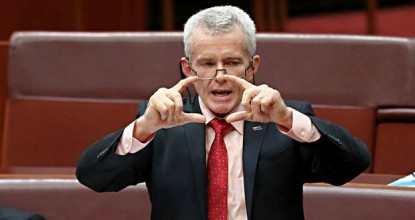
Question marks also hang over a fourth senator, One Nation’s Malcolm Roberts, who was born in India and has a Welsh father. Roberts insists he sought to renounce his British citizenship prior to nominating but he did not receive written confirmation of this from British authorities until six months after he was elected.

How did it come to this? Ordinary Australians around the country are scratching their heads wondering how the people they have elected to make laws, can’t even abide by our most important set of laws in the Constitution.

From an employment law perspective, it is interesting that the Australian Parliament does not hold itself to the same standard it holds other employers around the country in ensuring that its workers are legal. The ineligible senators are still Australian citizens and are not “illegal workers” in the same way that someone working without the appropriate visa is. However, their job as a senator requires that in addition to legally being able to work here like everyone else, they must not be a subject or citizen of a foreign power as per section 44 of the Constitution. In that sense, they could be considered “illegal workers”.

For Australian employers, employing illegal workers can result in fines of up to $21,600 and two years’ imprisonment for individuals or a fine of up to $108,000 for corporations. Ignorance is no excuse either. Larissa Waters, Scott Ludlam and Matt Canavan all claimed they were unaware of their dual-citizenship, as clearly was the rest of Parliament. However, in contrast, Australian employers cannot claim ignorance in their defence and are required to take “reasonable steps at reasonable times” to verify an employees’ work status.

Clearly, a more rigorous vetting process needs to be implemented so that the Australian Parliament is held to the same standards as all other employers in Australia. As things currently stand, the Australian Parliament is clearly of the mind of do as I say, not do as I do.

June 24

What changes are coming on 1 July?

With the new financial year fast approaching, businesses and human resource managers must now turn their minds to workplace planning and employee entitlements, having regard to new changes that will come into effect on 1 July 2016.

National minimum wage

As is required every year, the Fair Work Commission has reviewed the national minimum wage and has ordered a modest increase of 2.4%.

The national minimum wage was previously $656.90 per week or $17.29 per hour.

From 1 July 2016, the national minimum wage, which applies to employees who are not covered by an enterprise agreement or modern award, will be $672.70 per week or $17.70 per hour. This is a pay increase to the country’s lowest paid workers of $15.80 per week.

The Australian Council of Trade Unions (ACTU) had asked the Fair Work Commission for a $30 per week or 4.6% increase, whilst the Ai Group requested a rise of $10.50 or 1.6%.

The new rate of $17.29 is the lowest amount an adult employee can be paid if they are not otherwise covered by an enterprise agreement or modern award.

Award wages

As of 1 July 2016, minimum wages in all modern awards will increase by 2.4%, reflecting the same percentage increase as the one which applies to the national minimum wage.

This means that all award covered employees who are receiving minimum pay must receive a pay increase of 2.4%. Modern awards will be amended by the Fair Work Commission to reflect the increases to wages.

High income threshold

The high income threshold will increase from $136,700 to $138,900 on 1 July 2016.

This means that employees who earn over $138,900 will not be protected from unfair dismissal. Further, this could mean that employees who were previously above the threshold of $136,700 may no longer be above the new threshold amount and therefore, they may now be able to bring a claim if their salary has not been slightly increased.

Employers and human resource managers should carefully review the salaries of those staff who are close to the high income threshold, with serious consideration as to whether they should be increased above $138,900 in order to avoid the risk of an unfair dismissal claim.

It is important to remember that compulsory superannuation contributions are not included in the calculation of an employee’s remuneration for the purpose of the high income threshold. However, other items, such as the value of a car, work laptop and mobile phone can be included if properly documented by the company.

Things to watch

Over the next six months, businesses should also keep an eye out for:

  1. Changes to awards as part of the 4 yearly review of modern awards. At this stage, no date has been set by the Fair Work Commission as to when changes such as those relating to excessive annual leave accruals will be made to modern awards;
  2. Changes to the Fair Work Act as a result of the 2016 federal election. Both the ALP and the Coalition have stated that they will increase maximum civil penalties for breaches of the Fair Work Act, including underpayments. The Coalition has proposed to make amendments that will see franchisors, parent companies and directors liable for breaches of the Fair Work Act by their franchisees and subsidiaries, whilst the ALP has proposed to make it a criminal offence for those who deliberately exploit overseas workers.