April 20

Rugby Australia’s inclusion policy vs. Folau’s freedom of speech

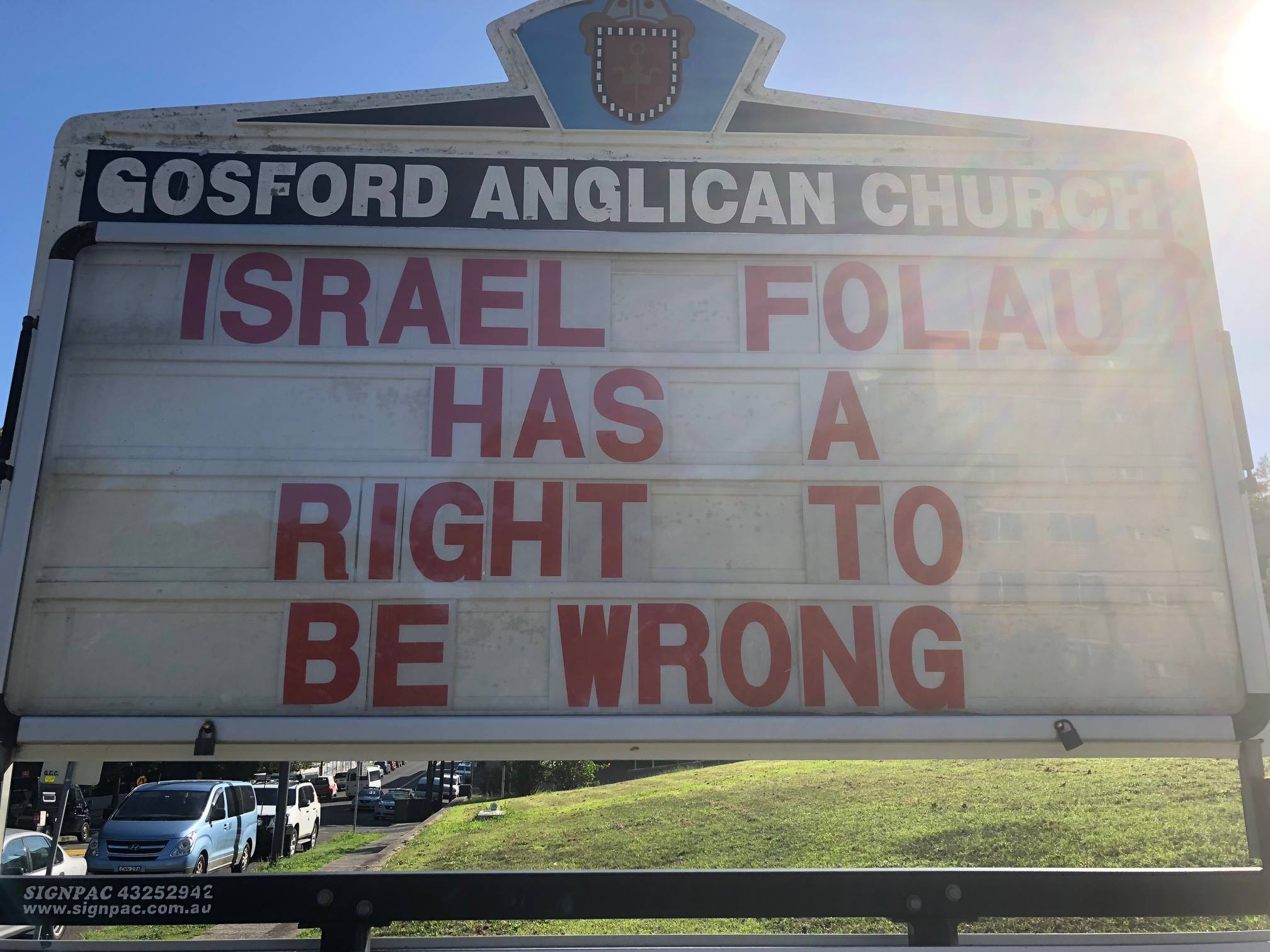
Earlier this month, high profile rugby star Israel Folau posted some highly offensive comments on Instagram stating that gay people were headed to “HELL… Unless they repent of their sins and turn to God”. It’s brought up the traditional questions about the right to free speech, vs. the rights of inclusion, as well as our expectations of sports stars who we laud as “role models in the community” until their off-field behaviour gets them into strife, or they go rogue with unsavoury opinions on social media.

Of interest to me has been the hypocrisy of spouting a commitment to LGBTQI inclusion but being unwilling to back it. Rugby Australia was rightly quick to distance itself from Folau the day after his comments were published on Instagram, stating that “Folau’s personal beliefs do not reflect the views of Rugby Australia. Rugby supports all forms of inclusion, whether its sexuality, race, or gender, which is set out in our Inclusion Policy (2014).” Some suggested such a response was merely to placate its largest corporate sponsor Qantas.

From that point on there were two clear paths that Rugby Australia could have been taken. Option A was to go down the freedom of speech avenue and let Folau deal with the consequences. Continue to distance themselves, let Folau cop any heat for his homophobia and leave it to more progressive Christians to challenge his views publicly. Or Option B – take a stance, and assess whether Folau’s statement was in breach of its Inclusion Policy, it’s social media policy, and any employment contract clauses. If Folau’s statements were in breach, then deal out the consequences. In doing so, show that its commitment to fostering inclusion and diversity in its organisation and the wider rugby community is more important than upsetting one of its stars. Follow the path it took last year when it pledged its support for marriage equality and the LGBTQI community.
Israel folau gosford church

If solely judged by the Court of Public Opinion, Rugby Australia would have probably come out fairly unscathed had they taken Option A. Media pundits, sporting commentators and fans appear determined to protect what they believe is our fundamental human right to free speech, arguing that Folau’s right to express his religious belief shouldn’t have been undermined by Rugby Australia’s concerns about upsetting sponsors. Whilst initially expressing their disappointment, I think it’d be unlikely that Qantas would have made any further public statements on the matter, given Alan Jones’ questioning of why the airline maintained a partnership with Emirates Airlines, which is based in the UAE, where homosexuality is punishable by imprisonment.

Instead Rugby Australia managed to get itself into quite a pickle, in its attempt to appease everyone. After meeting with Folau to discuss social media policy, CEO Raelene Castle emerged stating “I think Israel has acknowledged that maybe he could have put a positive spin on that same message and done it in a more respectful way”, and “Rugby Australia has got a policy of inclusion and using social media with respect”. Castle suggested it was just the first conversation, and more conversations with Folau would be had. She was however also quick to alleviate fears that Folau might be leaving rugby, stating “we would really like him to stay in rugby, that’s hugely important to us”. The overall impression was that Folau had been given a slap on the wrist and he’ll think twice next time, but that Rugby Australia was determined to hold onto its golden boy.

Yeah nah, Folau said. Rather than retracting his comments, he doubled down publishing an article quoting Bible passages to justify his remarks. He made it clear he would not easily give up his position and would walk away from his contract if necessary. He argued Castle mis-represented his position in her comments to the media and did so to appease other people.

Castle then appeared to back down and call an end to the matter, conceding there would be no sanctions: In his article, Israel clearly articulated his religious beliefs and why his faith is important to him and has provided context behind his social media comment. In his own words, Israel said that he did not intend to upset people intentionally or bring hurt to the game. We accept Israel’s position.”

Rugby Australia has attempted to placate everyone, but in doing so has managed to leave both sides of the divide pissed off. Those that believe Folau has a right to his opinions and to speak opening about his faith feel he shouldn’t have had to explain his actions to Rugby bosses. Some felt the game was letting down a decent man who had a right to express his religious beliefs without being gagged by his employer based on commercial considerations.

And on the other side it’s upset those who believe Rugby Australia’s response only compounds the hurtful message Folau made and leaves LGBTQI youngsters feeling unwelcome by a sporting organisation where such intolerance continues to exist. Some questioned whether Rugby Australia’s inclusion policy was worth the paper its written on.

Many questions remain unanswered – What would Rugby Australia do next time a player says something so offensive publicly? Is it ok if its faith-based? Is it ok to post hurtful comments as long as the player claims there was no intent to harm? Is it only ok if it’s said by a top player who does not seem particularly concerned about his future with rugby? Is it an inclusion policy with exclusion clauses?

If you’re going to have an inclusion policy or a code of conduct, be prepared to walk the talk. Have a good hard think when implementing these policies about the type of behaviour which would breach the policy, and what repercussions would follow. Rugby Australia proclaims its support for Pride in Sport initiatives and the creation of “inclusive spaces though the reduction of homophobia, stigma and discrimination.” It seems rather hypocritical to then to fail to reprimand one of its most prominent players when they seek to demonise a vulnerable minority group.

If Rugby Australia took action to sanction Folau, many would be outraged claiming Folau’s right to freedom of speech had been infringed upon and his employer has no right to censor him. However, freedom of speech is significantly qualified by exceptions. One of these exceptions can include a contract of employment which limits our freedom of speech to ensure we abide by the ethics, values and morals of our employers. Back in 2015 when SBS presenter Scott McIntyre found himself out of a job for breaching SBS’s Code of Conduct and Social Media policy after tweeting some offensive remarks about the ANZACs, Human Rights Commissioner Tim Wilson said “Decrying McIntyre’s dismissal as a free speech violation and censorship is absurd – McIntyre was free to tweet his bile before he worked for SBS, while he worked for SBS and now that he no longer works for SBS. SBS simply decided it didn’t want to be associated with him. No one is guaranteed a job. Employers are not compelled to put up with behaviour that harms their public reputation.”

Enforcing code of conducts, or policies around inclusion and diversity is a tricky business. They can be ambiguous and open to interpretation, if not well defined and communicated. Particularly when they attempt to capture behaviour outside of work. Rugby Australia’s Inclusion Policy attempts to do just though stating “There is no place for homophobia or any form of discrimination in our game and our actions and words both on and off the field must reflect this”. Rugby Australia has avoided engaging with their Inclusion Policy this time in fear of losing their code-hopping superstar, but it may make it even more tricky for them to enforce next time future off-field behaviour comes into conflict with the values that the organisation purports to support.


 

December 14

Three strikes and you’re out – is it possible to ban sports talk in the workplace?

A recent opinion piece in the Sydney Morning Herald raised the issue of sport conversation in the workplace, emphasising its ability to exclude as sport can be significant within a culture, but not necessarily for all individuals. While this may be true, it is difficult to argue that sport should – and more importantly can – be extricated from everyday life.

An iconic scene from cult British comedy The IT Crowd, jokes about the struggles of being the person at work who doesn’t know about football. In my view the scene really highlights both sides of this argument. The person with no interest in football is forced to gain knowledge in order to be able to engage in conversation with colleagues. On the other hand, the football fan thinks he is being friendly and connecting in light conversation.

The language of sport

Sport has long infiltrated the way we speak. Colloquial language has adapted sporting analogies into every day speech, to the point where it is likely that most people never realise their origins in sport. ‘Jump the gun’ stems from the starting signal for races, while ‘hit your stride’, ‘hands down’ and ‘down to the wire’ can be traced back to horse racing. To ‘run interference’ is actually a technical play in American Football and ‘saved by the bell’ originates from boxing.

It’s true that workplace culture has shifted to collaboration more than competition, and competition is the most inherent characteristic of sport. But to say that this is a significant problem with sport influenced language – which is used subconsciously – in the workplace not only overlooks how sport has become so ingrained in language as to be inseparable, but also the image of teamwork that sport and sport influenced language can instill and inspire.

The market for sport is growing

Geography is no longer a barrier, with sport reporting and fan following going beyond what is available domestically. There is a plethora of homegrown competitions and events available for consumption, like NRL, AFL, Big Bash League, A-League and W-League, ANZ Championship and V8 Supercars. But the market for sport has grown even more in recent years to include overseas competitions such as the Super Bowl, EPL, World Series and NFL.

It is easy to understand how, with so many different options for consumption, people can begin to feel ‘left out’ when conversations on these topics arise in the workplace. Even the most avid sportsman can’t be across every type and competition available. Amidst all this, employers have the unenviable job of maintaining an inclusive atmosphere in what can be a very diverse workplace. This is not a small task, and workplace policy plays a significant role in managing employee behaviour and professional interaction.

But is it really possible to control behaviour as far as appropriate conversation topics, and where do you then draw the line?

Perhaps it is possible to limit discussion of local competitions that run for a regular and lengthy season. It must be difficult to work in Melbourne where AFL is a way of life as much as it is a sport. When there are multiple games on each weekend for a number of months, the opportunity for prolonged and regular discussion is significantly increased. On the other hand, major event sporting, such as the Olympics, World Cups and the Melbourne Cup, can often gather the attention of larger groups – even those who wouldn’t generally consider themselves sports fans. There is no logical way that you can put a partial ban on sport conversation without including all types.

50565180 - soccer players in action on the sunset stadium background panorama

Diverse society has diverse interests

The question then becomes even more complex. If sport is banned, there are many other areas of interest and discussion that can be considered as equally exclusionary. In the last 20 years, television viewing options have become more diverse. Digital TV has opened up new channels for free-to-air and web streaming like Netflix has revolutionised the ability to ‘binge watch’ whole seasons in one sitting.

For those who don’t watch a lot of TV, or who are late to join a cult show following, water cooler discussion about the latest revelation on Game of Thrones can be just as daunting – particularly when they start spouting phrases like ‘Winter is Coming’ and ‘Hold the Door’ that to a non-viewer have no real connotation. In many ways, TV as a conversation topic is even more divisive than sport in the workplace as it is somewhat time-sensitive: seasons and series are finite, story lines vary from year to year and the attention span of viewers moves on quickly. Unintentional ‘spoilers’ can also sour interpersonal relationships.

When you spend roughly a third of your life working, it is important to enjoy what you do. A big part of that is building connections with your colleagues, which in turn strengthens collaboration and teamwork. The foundations for these connections are light conversation and anecdotes, which are frequently provided by recent events. Sport is the one of the best options for these moments, it is rarely as polarising as politics, and even the most contradictory opinions can be joked about. The real problem in banning sport conversation in the workplace, is that, rather than create unity it will merely create more opportunity for people to feel excluded. It is impossible to say one person’s interest is forbidden when another’s isn’t. Workplaces are moving towards being more flexible, connected and informal, and placing bans on some or all non-work related topics is a step in the wrong direction.

May 4

Out of work conduct: when is dismissal justified?

We see it all the time in professional sports: athletes losing their contracts over poor decisions made away from the game. Take for example, Todd Carney who was spectacularly sacked from the Cronulla Sharks, without procedural fairness, following the ‘bubbler’ incident, or Nick D’Arcy who was kicked off the Australian swimming team bound for the Beijing Olympics after he punched former swimmer, Simon Cowley, in the face, breaking his jaw. The reason that is almost always given by the clubs and sporting bodies to justify the athlete’s termination is that they ‘brought the sport into disrepute’ or that they breached the team’s code of conduct.

Due to the tremendous amount of attention that is received when a professional athlete puts a foot wrong and then the subsequent disciplinary action that inevitably follows, it is not unusual for employers to similarly think that they are entitled to take action against an employee when they exhibit out of work behaviour that they do not agree with. Whilst this is normally behaviour which would be considered criminal and which the police are involved in, it also increasingly includes posts on social media which could be damaging to a colleague or the business as a whole. So then, when can an employer dismiss an employee for conduct that occurred away from work?

The key for employers to remember is that they have very little control over how an employee chooses to spend their time away from work. They cannot dictate what an employee can or cannot do unless there is a sufficient connection to the person’s work and likewise, it is very difficult for an employer to terminate an employee’s employment (which will subsequently not be found by the Fair Work Commission to be unfair) for out of work conduct.

In Deeth v Milly Hill Pty Ltd [2015] FWC 6422, an employer was found to have unfairly dismissed an apprentice butcher after he had been arrested for being an accessory after the fact to murder. The employer produced evidence that customers would boycott the small butchery and other employees would resign if it continued to employ the apprentice. However, the Fair Work Commission found that the employer had a ‘knee jerk’ reaction to the arrest and should have carried out a reasonable investigation prior to terminating.

This case makes it clear that employers must be extremely careful when terminating an employee for out of work conduct. Further, employers must still ensure that a fair process is carried out, no matter how serious the alleged out of work conduct is. Just one of the factors that the Fair Work Commission must have regard to when determining an unfair dismissal is whether the employer had a valid reason for dismissal. The other factors which are considered are all relevant to whether a procedurally fair process was implemented and whether the employee was given the opportunity to respond to the allegations prior to termination.

However, there will be times when an employer can consider termination (following, of course, a procedurally fair process), including when the behaviour:

  • Damages the reputation or commercial interests of the employer (for example, by very specifically referring to the company on social media in a damaging or disparaging way);
  • Is incompatible with the employee’s duties that they perform for the employer (for example, if a truck driver had their licence suspended or cancelled for high range drink driving);
  • Occurs at an extension of a work related event or occurs in the presence of colleagues (for example, if a person becomes intoxicated at a work event and after it has ended, an employee sexually harasses a colleague).

In Kolodjashnij v J Boag and Son Brewing Pty Ltd [2010] FWAFB 3258, Fair Work Australia (as it was then called) found that an employee who had been terminated after being charged with driving his personal vehicle whilst three times over the legal blood alcohol limit, was not unfair. Importantly in this case, the employer, who was a manufacturer of alcohol, had a policy that stated that if an employee was charged with drink driving, their employment would be automatically terminated because of the negative impact it would have on the business, which was located in a small town. In this case, the employee was aware of the impact a drink driving charge would have. Further, the employer took time to make the decision and allowed the employee to respond to the allegations which were made against him, ensuring that the process was fair.

What is important for a business to ensure when it comes up against an employee who has acted poorly outside of work is to consider the impact that it actually has on the business. Whilst the employer might find the conduct to be morally or ethically wrong, this will not be enough to terminate the employee’s employment. The conduct must be sufficiently related to the employee’s job so as to impact the business’ reputation and/or render the employee incapable of carrying out their duties.

December 3

David Pocock and the ARU. When do employers cross the line?

David Pocock is the latest example of a football player who has been sanctioned by their employer for what the code or employer consider undesirable behaviour outside of work.   But in this case it is not recreational drugs, drinking or sexual indiscretion, violence against women, or (most exotically) the bubbler…..  This time Pocock has been given a written warning for his involvement in a political protest.  Read Pocock’s official statement here.

Pocock was arrested, and his actions were allegedly in breach of the ARU and Brumbies code of conduct.  However sanctioning players for involvement in political protest steps dangerously close to sanctioning them for their political beliefs or activity.  Australian society elevates football players to the role of saints – and football codes face such fierce competition from each other that they will sanction players for anything which brings the codes into disrepute.  However we mustn’t forget that despite the public and code’s desire to see them as perfect, they are legally no more than parties to an employment contract, and the football leagues have no greater right to impose standards of conduct on their employees than any other employer.  Have they gone too far this time?  Personally, I believe it is reasonably within the employers’ rights to sanction employees that bring their game or brand into genuine disrepute.   This is beyond question when we are talking about violence, drunkeness or depravity.  But when the allegedly disreputable behaviour is a matter of political or environmental debate, the swiftness of the ARU’s actions seem knee jerk and poorly motivated.

During the same week, the St Louis Rams reacted quite differently to calls for an apology from police groups on behalf of players performing the “hands up don’t shoot” protest relating to the Michael Brown controversy immediately before a game.

Photo courtesy of USA Today

Photo courtesy of USA Today

In their official view, while any offence  caused to the police by the players’ actions was regrettable, it was part of the players’ free rights of expression protected by the First Amendment of the Constitution.  The fact that the employers had provided the platform on which the protest was public made little difference to the players’ fundamental rights.   The Michael Brown situation in the USA is highly charged both politically and emotionally – yet the Rams seem to have handled this public relations challenge without appearing to take sides, nor to encroach on their employees’ rights. We have heard much about the US Constitution’s First Ammendment restraining the Executive government from action in relation to a citizen’s exercise of free speech, but it is interesting to see this constitutional freedom trumping a contractual employment relationship as well.

I can understand the necessity for a strict code of conduct for professional sports players, but exactly how narrow should the scope of this conduct be?  And is this further indication that Australians need some fundamental rights to sit alongside the agreements we make from day to day?