
May 4

Out of work conduct: when is dismissal justified?

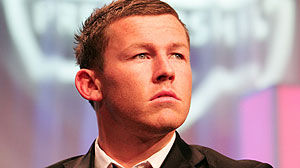
We see it all the time in professional sports: athletes losing their contracts over poor decisions made away from the game. Take for example, Todd Carney who was spectacularly sacked from the Cronulla Sharks, without procedural fairness, following the ‘bubbler’ incident, or Nick D’Arcy who was kicked off the Australian swimming team bound for the Beijing Olympics after he punched former swimmer, Simon Cowley, in the face, breaking his jaw. The reason that is almost always given by the clubs and sporting bodies to justify the athlete’s termination is that they ‘brought the sport into disrepute’ or that they breached the team’s code of conduct.

Due to the tremendous amount of attention that is received when a professional athlete puts a foot wrong and then the subsequent disciplinary action that inevitably follows, it is not unusual for employers to similarly think that they are entitled to take action against an employee when they exhibit out of work behaviour that they do not agree with. Whilst this is normally behaviour which would be considered criminal and which the police are involved in, it also increasingly includes posts on social media which could be damaging to a colleague or the business as a whole. So then, when can an employer dismiss an employee for conduct that occurred away from work?

The key for employers to remember is that they have very little control over how an employee chooses to spend their time away from work. They cannot dictate what an employee can or cannot do unless there is a sufficient connection to the person’s work and likewise, it is very difficult for an employer to terminate an employee’s employment (which will subsequently not be found by the Fair Work Commission to be unfair) for out of work conduct.

In Deeth v Milly Hill Pty Ltd [2015] FWC 6422, an employer was found to have unfairly dismissed an apprentice butcher after he had been arrested for being an accessory after the fact to murder. The employer produced evidence that customers would boycott the small butchery and other employees would resign if it continued to employ the apprentice. However, the Fair Work Commission found that the employer had a ‘knee jerk’ reaction to the arrest and should have carried out a reasonable investigation prior to terminating.

This case makes it clear that employers must be extremely careful when terminating an employee for out of work conduct. Further, employers must still ensure that a fair process is carried out, no matter how serious the alleged out of work conduct is. Just one of the factors that the Fair Work Commission must have regard to when determining an unfair dismissal is whether the employer had a valid reason for dismissal. The other factors which are considered are all relevant to whether a procedurally fair process was implemented and whether the employee was given the opportunity to respond to the allegations prior to termination.

However, there will be times when an employer can consider termination (following, of course, a procedurally fair process), including when the behaviour:

  • Damages the reputation or commercial interests of the employer (for example, by very specifically referring to the company on social media in a damaging or disparaging way);
  • Is incompatible with the employee’s duties that they perform for the employer (for example, if a truck driver had their licence suspended or cancelled for high range drink driving);
  • Occurs at an extension of a work related event or occurs in the presence of colleagues (for example, if a person becomes intoxicated at a work event and after it has ended, an employee sexually harasses a colleague).

In Kolodjashnij v J Boag and Son Brewing Pty Ltd [2010] FWAFB 3258, Fair Work Australia (as it was then called) found that an employee who had been terminated after being charged with driving his personal vehicle whilst three times over the legal blood alcohol limit, was not unfair. Importantly in this case, the employer, who was a manufacturer of alcohol, had a policy that stated that if an employee was charged with drink driving, their employment would be automatically terminated because of the negative impact it would have on the business, which was located in a small town. In this case, the employee was aware of the impact a drink driving charge would have. Further, the employer took time to make the decision and allowed the employee to respond to the allegations which were made against him, ensuring that the process was fair.

What is important for a business to ensure when it comes up against an employee who has acted poorly outside of work is to consider the impact that it actually has on the business. Whilst the employer might find the conduct to be morally or ethically wrong, this will not be enough to terminate the employee’s employment. The conduct must be sufficiently related to the employee’s job so as to impact the business’ reputation and/or render the employee incapable of carrying out their duties.

November 6

What should employers take from the Todd Carney Saga….

In March I blogged about Todd Carney, and his potential legal claim against the Cronulla Sharks for unlawfully terminating his contract of employment.    It was of little surprise then to learn that this action has now been brought.  The media are describing this action as ‘Unfair Dismissal’.  Those familiar with current workplace law will know that this is not strictly correct.  ‘Unfair Dismissal’ is a statutory action under the Fair Work Act, which has a jurisdictional restriction to include only employees earning under the $135,000 high income threshold.   Todd Carney’s legal claim will be for ‘Unlawful Termination’ by the Cronulla Sharks.  This action is based on a common law breach of contract.

The point of this update however, is not to gloat.  Nor is it to split hairs about employment law terminology.

Rather, the Todd Carney situation  provides a very good example of a common misconception and an error made by many employers under the current statutory environment.   Just because someone is exempt from unfair dismissal does not mean that an employer is free to terminate them with no possible remedy. Employees over the threshold can still protected by Contract.  Understanding the written document, as well as implied terms, are crucial before making any type of adverse decision against an employee. The liability under contract, particularly if implied terms are left to operate, can be far worse than the penalties prescribed under statute or enforced by the Fair Work Commission for Unfair Dismissal.   This recent case is a great example of this. 

The Cronalla Sharks may be about to find this out the hard way.  And it will likely to be a lot more expensive than a quick trip to a Fair Work Commission conciliation.

March 16

Todd Carney and procedural fairness – a picture does not always say 1000 words….

I am completely unsurprised at news over the weekend that Todd Carney has been found to have been wrongly dismissed by Cronulla Sharks.  At the time of his dismissal, I couldn’t help but notice the incredibly short time between his ‘bubbler’ incident going viral online, and  the announcement of the termination of his contract.   Anyone with knowledge of workplace law will know that valid terminations are not that fast.    As we have seen in recent years, both the NRL and many of its clubs have been enforcing a ‘zero tolerance’ policy across the board on player transgressions.  They have leaned heavily on the player code of conduct, and the players’ essential contractual obligation not to ‘bring the game into disrepute’, in enforcing this approach.

But ‘zero tolerance’ is one thing, and procedural fairness is something else.   Employers may be able to deny ‘tolerance’ from the workplace relationship, but they cannot deny natural justice from it.  This is a step too far.   For this reason, wherever you stand on the ‘bubbler’, Todd had a very good case from the very beginning that this termination was unlawful, primarily because the Sharks never gave him a chance to respond to the allegations of wrongdoing.

Interestingly though, in the aftermath of the announcement the Sharks and many members in the media have jumped on the ‘procedural’ issue heavily in their own defence.  The Daily Telegraph  quotes Cronulla chairman David Keogh as saying:

“The big oversight was that someone needed to check that the process being followed was correct.  What’s important to remember here is that it’s not a question of the facts, it’s a question of the process, but the reality of the situation is, the decision would likely have been the same.”

The telegraph themselves take this one step futher, describing (in the article’s photo caption) the original decision as being flawed due to a ‘processing error’.   Underlying this discourse however, is a fundamental misunderstanding of the purpose of ‘procedure’.  The distinction between’substantive’ and ‘procedural’ issues in law is a deep and complicated jurisprudential issue, and I do not want to delve into it too deeply here.  However too many employers still see them as completely separate, and the ‘procedure’  as a cursory or less significant issue.  This  leads to mistakes. While there are some complex issues, the simple one is this:  without procedural fairness, you can’t actually be sure whether or not the right substantive decision has actually been made.

In the wrongful (or unfair) dismissal field,  most employers acknowledge the legal requirement that employees have an entitlement to ‘answer the allegations’.  But the employers’ obligation is not simply to hear the employees side of the story before terminating the employment, the obligation is actually to defer their decision on whether or not to terminate until after the employee has had an opportunity to respond.  This is a mistake made by many, and clearly by the Sharks in this case.   Mr Keogh’s assertion that “the reality of the situation is, the decision would likely have been the same” is not his to make.  That is the purpose of procedural fairness.  In this case if I had I been the decision maker, or workplace investigator, a lot more information would have been useful before making the determination.    What was the context of the prank? Who took the photograph? How was the photograph first uploaded to the internet? How was it propogated? In order to assess Todd Carney’s ‘conduct’, it is important to get across all of the details of the actual conduct, not to simply assess it on the basis of the outcomes of that conduct.  Without giving a genuine opportunity to respond, it is impossible to make this determination correctly.  The unfair dismissal jurisdiction of the Fair Work Commission is littered with examples of employers making this same mistake.*   In my experience as an employment lawyer, I have seen on many occasions an employer obtaining photographic or video evidence of wrongdoing, and subsequently abandoning all procedure.  This is tempting, but a mistake.

Carney has defended himself throughout, saying among other things “I haven’t been in jail, haven’t bashed my wife, haven’t sold drugs to kids or done drugs, and those are players who seem to be allowed back in.”    Without delving into the substantive fairness of this issue – I have to agree with him there.


* The Todd Carney decision was made by the NRL Appeals committee, not by the Fair Work Commission, and because Todd Carney’s income at the time is presumed to be well over the unfair dismissal threshold it is unlikely that he would receive protection under the unfair dismissal jursidiction.   This factual scenario has been used broadly as an analogy for the purposes of speculative discussion only. 

** Helen Carter is the Director and founding solicitor at PCC Lawyers, a team of employment practitioners based in Sydney, with many years of combined knowledge and experience in workplace law, industrial relations, workplace investigations and training.  They provide a high standard of excellence and an exceptional level of personal service to a variety of clients in the Sydney metropolitan area, Central Coast, regional NSW and interstate.