March 27

5 inconvenient truths about ‘casual conversion’
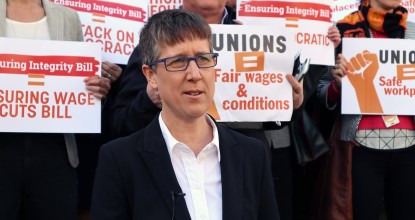
Sally McManus threw down the gauntlet to ‘big business’ last week on behalf of the ACTU at the National Press Club.

Ms McManus set out a number of proposals about industrial relations, following through on the ACTU’s various television and social media promises that they would #changetherules.  Issues such as a crack down on the gig economy, an overhaul of the labour-hire industry, a 7.6% raise to the minimum wage, greater access to collective bargaining, more robust ‘good faith’ bargaining provisions, and broader arbitral powers for the Fair Work Commission are all currently on the ACTU’s political agenda.

Most notably, however, was the reintroduction of a proposal that would allow all casual employees to convert to permanent employment status after six months of employment.  As rationale for this, McManus claims casuals have no ‘job security’ and should not be denied basic rights by the refusal of permanent positions, claiming that the average ‘tenure’ of casual employees is 3 years.ACTU_logo_1

This may be exciting rhetoric to support the #changetherules groundswell, however in respect of casual employment it forgets the following:

One – The idea that permanent part time employees have ‘job security’ is a myth.

It is perhaps a sad reality, but permanent part time employees do not have significantly greater ‘job security’ than casual employees. Casuals are covered by the exact same unfair dismissal provisions if they are engaged on a ‘regular and systematic basis’. They are also covered by the General Protections provisions of the Fair Work Act preventing any unlawful adverse action.

Permanent employees, under the National Employment Standards, are entitled to personal leave, annual leave, notice, and in some cases redundancy, but these financial benefits are negligible. Further, redundancy and notice (particularly in the first three years) are not significant enough to represent ‘job security’ in the mythical sense advocated by unions.  These end of employment employment benefits (if they are ever realised) are significantly less than the twenty-five percent loading on top of every hour worked over the course of employment that is currently received by casuals.

The key difference (and some would argue only practical difference) is that casual employees are engaged on a flexible basis, with no guarantee of hours.  What Ms McManus is therefore proposing, is that those employed on a flexible hours basis should be able to demand a guarantee of ongoing fixed hours after only six months of employment.  When we cut through the political rhetoric, this is the only substantive change which would result from the ACTU’s proposal. And this raises some significant hurdles.

Two – There is a social need for flexible hours employment, which is growing.

Some casual jobs in society exist as a permanent reality, and the mere fact they may be done long term by a particular person does not change the essential nature of that role, or the ongoing requirement for it to exist. As consumers, we demand flexibility and choice, and as our market place becomes larger and more global, we are generally becoming averse to commitment. Sectors such as hospitality, retail, agriculture, education, all have a growing requirement for flexibility of staffing, which is tied directly to consumer demand.

Perhaps the best current example is the roll out of National Disability Insurance Scheme, which has been a key objective of the Australian Labour Party, and other socially progressive Australians, for decades. The community generally have nothing but praise for the objectives of the NDIS, because it puts the control back with the participant. However, from an employment perspective this has created a turbulent and unpredictable wave of participant led supply and demand throughout the entire disability services sector.  Industry experts predict that the response to the roll out of the NDIS will lead to an almost complete casualisation of the industry.42995295 - young female care assistant helping senior man

As a rule, consumers are demonstrating a trend towards less ‘commitment’ to products and services.  Restaurant customers rarely book tables, except for a very small class of venue.  NDIS participants can change providers, or the nature of the supports they require, with virtually no notice.  Educational institutions compete for student revenue, and take enrolments up to the day before teaching commences, which has broad impacts on teaching and other employment levels.

We cannot expect employers in competitive markets to maintain an employment commitment when their customer base gives no guarantee of revenue. Despite what people think, the clear majority of businesses do not have large reserves of revenue.  While it may be convenient to blame ‘big business’ for driving casualisation of the workforce, it is primarily a response to the casualisation of every day life.

Three – Flexible hours creates employment growth, and regulation imposing commitment causes employment opportunities to recede.

For an example, I look no further than my own hospitality businesses, which I operated in regional New South Wales between 2004 and 2014.  These businesses did not exist prior to 2004. We began with one full time employee, and three casuals.  By 2014, we had two venues, 5 full-time employees and approximately 30 casuals, representing a total of approximately 12 full time equivalents.  Our wage cost correlated almost exactly with revenue to the extent possible, and this hovered typically at 40% of revenue, which was at the upper end of what was sustainable in that sector. Our businesses were healthy but never insanely profitable. But one thing that could always be said was that we actively created jobs from day one.  Those jobs were of a type, and in a location, where they were needed, and appreciated, by the people that held them.

If a legal entitlement had existed for any of the employees to make an election to convert to guaranteed and fixed hours, and been taken up by employees, three things would have inevitably happened:

  • the total hours (which had varied from week to week) would have reduced overall for those employees, as the business would only have been able to commit to the lower end of the possible spectrum of hours available from week to week;
  • the business’ capacity to maintain casual arrangements with other employees would have diminished, due to the commitment that had been made to the fixed hours employees, and new opportunities would have been slower to arise; and
  • given that the business would only be able to commit to the lower end of possible variation of employee hours, overall staffing would be reduced, and the capacity for the business to successfully deliver service to customers would have been threatened. This would have represented a threat to customer satisfaction, revenue, and in turn a recession of employment opportunities.

This may seem melodramatic or an exaggeration to some.  But I suspect those people have never had a small business, nor had to wonder where next week’s payroll was coming from.

In whatever plans we make in order to protect vulnerable employees, we need to acknowledge that flexibility is always a precursor to growth, and growth is a necessary part of economic and social prosperity for everyone.

Four – A requirement for fixed hours after six months will incentivise short term casual employment.

There is no question that an entitlement to conversion after six months would create an incentive for employers to end casual employment prior to the entitlement arising. This is especially given that six months would also conveniently correspond with the commencement of unfair dismissal protections.  It doesn’t take a ‘Mr Burns attitude’ to employment to work this one out. It is a no brainer. Those employers who are currently loath to commit to permanent arrangements (particularly amongst those employing entry level or unskilled workers) are likely to take this course.  Prior to the six-month period, there will almost no legal remedy for employees who lose their casual employment.  However, once they go beyond six months, not only will they be protected from unfair dismissal, but the entitlement to conversion will have arisen, and become a workplace right.  The employees will be protected from adverse action under Part 3-1 of the Act for any proposal to exercise that right. For many employers, even the existence of this risk will create overwhelming incentive to end employment before this leverage can exist.

For many employees, seeking to work a casual job in the medium to long term with no desire to become permanent, this factor will put their employment at risk prior to the end of the first six month period.  This would be counter-productive and contrary to the interests of vulnerable workers.

Five – Employers are vulnerable too.

This is the reality that is most often ignored by the union political dialogue, as they seek to inappropriately polarise the community into the ‘workers’ and ‘big business’.  Less than 10% of private sector employees are union members, and small and medium businesses account for 97% of Australian businesses, employing over 40% of Australia’s workforce.  A clear majority of the employment community no longer fit into the unions’ rhetorical paradigm. Businesses cease trading every day because of economic pressures, and this leads to job losses.  Any sudden regulatory change which makes it considerably harder to maintain sustainable businesses will have broad social and economic consequences which effect everybody, most notably vulnerable workers.  It is immensely foolish to promote a #changetherules initiative to allegedly increase job security, when it is obvious that it will only result in widespread job losses and uncertainty throughout the economy.

But I am pretty certain that Ms McManus and her ACTU friends actually know all of this, and this is just the latest political push to get someone charismatic to Canberra.  I’m equally confident that Australian workers are probably wise (and weary) enough to be cynical when a proposal to #changetherules looks a little too good to be true.

January 29

The Sydney Rail Strike – why the Fair Work Commission had no choice.

As an industrial lawyer, it was probably a mistake logging onto social media on Thursday, in the aftermath of the Fair Work Commission’s order in relation to the RTBU strike proposed on the Sydney rail network.  Social media in the modern political era is rarely a place for nuanced, informed or intelligent discussion.  Rather, it has become a place where people from both sides of politics (there are only two sides by the way) do little more than ‘like’, ‘share’ and ‘comment’ on pieces of web content that conform with their side’s view, and to dismiss (or troll) anything that doesn’t.

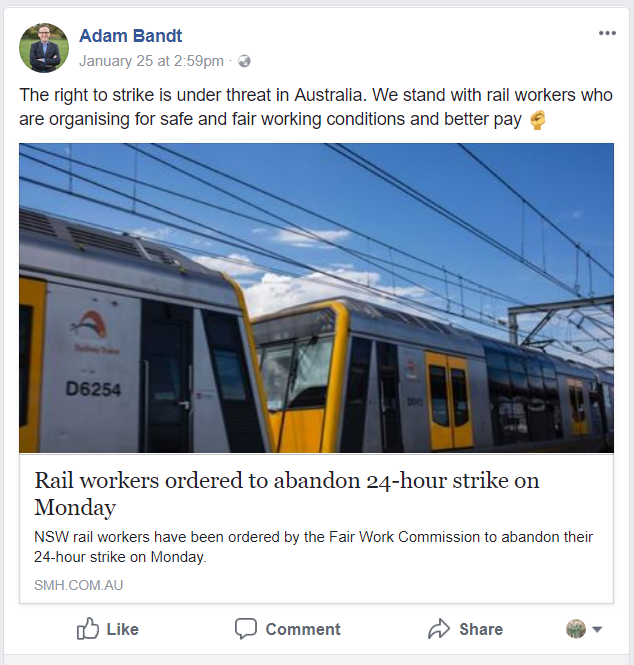
The backlash to DP Hamberger’s order was typically fervent.  For example, Greens politician Adam Bandt stated: “The right to strike is under threat in Australia. We stand with rail workers who are organising for safe and fair working conditions and better pay [fist emoji]”. Mr Bandt’s post led to a barrage of commentary, with common references to the ‘Unfair Work Commission’, a comment describing the Commission as ‘Liberal stooges’ (which for the record, has not been my experience of appearing before the Fair Work Commission), a comment that the rail workers had been ‘spat on’ by the Commission, and perhaps my favourite: ‘fascist legal controlled by state government is on the rise.”

Bandt post

Overall, the message of the commentary seemed to be that the prevention of the strike was yet another example of the ‘dystopian capitalist roll-back’ currently gripping the societies of the western world.  In particular, it appeared as a regular view on Facebook that the legislative power to prevent this industrial action was new, or somehow recently introduced by government. This is plainly wrong, and deserves correction.

It is with some irony that these industrial events centred around the Australia Day weekend. In my view, industrial relations is perhaps the one area of Australian politics of which we can be very proud. By international standards, Australia has always committed to and maintained a genuine balance. From the very early years of Australian political history, we have attempted to craft a system with appropriate harmony and tension between employer and employee interests. Consistent with Aussie informality, we call this ‘a fair go all round‘.  Most notably, the Concilation and Arbitration Act 1904 (Cth), was one of our very earliest, and most important, Commonwealth enactments.  Over the subsequent century, maintaining this balance between the employer and employee relationship has been a key part of our legal and political discourse.  Three of our most famous and important High Court Cases concerning the scope of Commonwealth power: the Engineers Case, the Boilermakers Case, and the Work Choices Case, have each originated as disputes over employment agreement making.  The Coalition have only made one concerted attempt in the modern era to reform industrial relations in a manner which genuinely undermined the power of employees. This effort, in 2005, was the primary cause of the immediate demise of the most dominant Coalition government in modern history, following an ALP landslide in 2007. The modern Coalition, who seem unashamed to deny climate change, lock up infant refugees, and do everything in their power to block marriage equality, have spent over five years in office hedging around industrial relations like it is a poisoned chalice. It is therefore safe to say, that the value of the employment relationship sits at the very heart of our political and social consciousness.

In the United States, liberals often cite the Australian system as a positive example of how substantial employee minimum wage and entitlement provisions can coexist with sustained economic growth.  On the other hand, countries such as Greece have demonstrate that uncontained freedom and exercise of industrial action can have broadly detrimental consequences to economic and social well-being.  To this end, both ‘sides’ of politics should remember that we have always (at least in this one area of law) achieved a relatively healthy political compromise.

45497517 - sydney city trafficIt is not often that I go out on a limb to defend the Commonwealth executive. But on this occasion, I am happy to be the first to opine that there was nothing controversial about Thursday’s order by the Commission.  And nothing about it was inconsistent with the similar orders made in the late 1990s or early 2000s, under the equivalent provisions of the Workplace Relations Act 1996 (Cth).  Further, I acknowledge that the Fair Work Commission members are political appointments, and Deputy President Hamberger was appointed to the Commission by a Coalition government, and has an industry, rather than union, background. However, I believe that the decision was non-partisan, and that any one of the many Commissioners or Deputy Presidents appointed from union backgrounds by Bill Shorten during the Rudd / Gillard government would have come to the same or similar result.

The reason for this, is that the rationale for making the order is premised on very narrow grounds, contained in section 424 of the Fair Work Act 2009 (Cth).  This has been feature of Act for a decade, and the various predecessor legislative instruments for generations.  Industrial action has never been ‘protected’ under Australian Law when it has the capacity to ‘threaten the welfare of part of the population’, or to cause ‘significant damage to the Australian economy or an important part of it’.

The Deputy President held that the strike would threaten welfare of part of the population, recognising the number of people that rely upon the trains to go about their daily business, and making specific reference to the already congested conditions of Sydney roads, which are dangerous as they are, without thousands of additional cars, busses, and pedestrians.

However, the Deputy President also held that the strike would significantly damage the economy of Sydney. To understand the meaning and importance of this provision, we need to look a little more deeply at the concept of ‘the economy.’  In the politically polarised world of ‘like’ and ‘share’ social media, ‘the economy’ is generally a code word for interests of the established rich, in particular the interest of ‘getting richer’.  In the context of an ever-widening equality gap, this often equates to the poor getting poorer.  The ‘economy’ is too often used by the political right in the ‘Republican / Trump / trickle down’ sense of the word, to scaremonger and justify cruelty or lack of attention to the underprivileged.  When striving for social justice therefore, it is very easy, and often justified, to disregard ‘the economy’ as an irrelevant consideration.

However, ‘the economy’ in its ordinary sense means a lot more than this, and the Fair Work Commission are correct not to adopt this inflammatory or politically supercharged meaning.  The meaning of ‘economy’, in accordance with the Macquarie Dictionary is:

……… 4.  the management, or science of management, of the resources of a community, etc., with a view to productiveness and avoidance of waste: (national economy). 5. the disposition or regulation of the parts or functions of any organic whole; an organised system or method…..

To this end, the ‘economy’ is not merely the interests of the political right, or of those that own the ‘means of production’.  It is all of us.  Our economy is the sum total of our collective financial interests.  This necessarily includes, and is sometimes little more than a collective appreciation for our individual financial interests.  The New South Wales Government, may not stand to lose that much from a 24-hour strike, but many people in Sydney do.

To see an example of the potential economic effects of the Sydney rail industrial action, I had to go no further than my office’s local station, at St Leonards.  On Thursday, during the reduced timetable due to a union overtime ban, the food court was already deserted at lunch time.  Most of these businesses are run by self-employed, small operators, paying high rents.  The casual employees had been sent home, and the businesses were operating on skeleton staff.  These self-employed operators, and their casual employees were out one day’s pay, in a week when they had already lost one day’s pay to the public holiday. If the strike had gone ahead, this would have been three consecutive business days’ pay.  The knock-on effects are obvious.  For some of these employees, this could be the rent that is due next week, food for their families, or the difference between buying their kids’ new school shoes in time for the start of term.  Or, perhaps trivial to some, it would mean merely missing out on the few, well deserved, beers they had planned to have on the Australia day weekend.  Further up the chain, this equates to less revenue for the grocery store, the shoe store, and the pub.

RTBUIn many ways, it would be useful to adopt Lord Atkin’s famous ‘neighbour’ principle when we discuss the term ‘economy’, rather than seeing it as only applying to the interests of the powerful or wealthy companies and individuals that appear to control the economy.  When we do so, it takes on a different complexion.  While the members of the RTBU may wish to forego a day’s pay to secure a 6% rather than 2.7% increase, I don’t see why the casual employees at the St Leonards food outlets, nor the self-employed operators, should do so, either voluntarily or otherwise.  And these are only the first level ‘economic effects’ that are visible and obvious, before moving beyond one railway station.  When magnified to the entire network, and city, the exponential knock-on effects are obvious. When we assess the broader potential losses to those people relying on the rail network, or those relying on the roads, to make their income, or even just the loss of productivity to those business requiring their employees to attend work, the impact was potentially enormous.  Clearly, this proposed strike was never about workers exercising leverage over an employer, it was about workers exercising leverage over an entire community, including other workers, many of whom have no security of income.  John Classen, on behalf of the RBTU, issued a media statement on Thursday prior to the order encouraging employers to ‘give their employees a day off on Monday’.   While to your average full-time office worker, the idea of extending the holiday weekend seems like a pretty neat idea in principle, the costs of this on the economy (in the ‘neighbour’ sense of the word) would be astronomical.  If this this is the union’s genuine position on how the strike should have been handled by Sydney employers, it is very hard for the union to then argue that they were not cognisant of the effects of their proposed industrial action on the wider economy.  This is the type of leverage expressly prohibited by the Fair Work Act 2009 (Cth), and there is nothing new about this.

While the very existence of industrial action depends upon economic leverage, a just and balanced society needs mechanisms to determine what leverage is fair to the affected parties who are not involved directly in the specific employment relationship.  While workers are entitled to cause or to threaten to cause some economic harm to their employer to forward their own interests (as shown in cases such as BHP Coal Pty Ltd v CFMEU [2001] AIRC, 17 April 2001), we should stop short of allowing unions to leverage wider economic harm against their members’ own employment interests.

I am grateful to the train drivers that get me to work every day, and I recognise that they have significant concerns over the way they have been treated. I genuinely hope they ultimately achieve their industrial goals.  However, with respect, it just has to happen some other way. Contrary to what you might read on Facebook, the leverage that would have been caused by their proposed strike, has never been a leverage that they were entitled to exercise.

January 27

Domestic Violence Leave

Domestic Violence Leave

Like many, I was very pleased to see Rosie Batty named as Australian of the Year for her work in raising awareness and promoting the prevention of domestic violence. There are many working tirelessly in this field, but in the context of her own personal tragedy Ms Batty’s work is particularly special. Few of us would be able to go on after experiencing a tragedy such as hers, but to have the strength to reflectively use her experiences to prevent others sharing her own loss is truly courageous, and she is a most deserving recipient of the award in my opinion.

Behind the scenes, in workplace law, the issue of domestic violence has been approached in a less satisfactory matter. As a major social epidemic, it requires non-political and bi-partisan cooperation from government, employers and unions alike. But unfortunately domestic violence seems to have been distilled down to a stereotypical arm-wrestle between employers and unions over the usual entitlement – paid leave.

Domestic violence leave (‘DV leave’) is a relatively new concept which has enjoyed rapid growth over the last 5 years. Currently, nearly 2 million Australian workers are covered by DV leave, as a result of Union collective bargaining. The ACTU are now pushing hard for the statutory inclusion of a minimum of 10 days’ DV leave for all full time employees, pro-rata entitlements for all part time employees, and have lodged a claim in the Fair Work Commission. This article by Jenna Price outlines some of the developments in greater detail.

I agree with Ms Price’s sentiments regarding domestic violence, but do not agree that paid leave will achieve a reduction in domestic violence. Having spent nearly 20 years negotiating with unions, I have become accustomed to their unique attitude to paid leave as not only the primary goal of negotiation, but as a pancea for all ills – the idea that any problem or challenge faced by employees in their personal lives will be overcome by their employers paying them to stay away from work. From the employers’ perspectives, the cost of leave amounts to not only the actual cost of wages paid, or replacement staff, but is compounded by loss of productivity and business cohesion. I have worked on Enterprise Agreements where some full time staff members were entitled to as much as 75 days paid leave. If all of this is taken, it amounts to the employee being absent on average for nearly 2 days out of 5. Most full time employees across a variety of industries would agree that this type of absence makes it very difficult to achieve productivity by their own standards and goals, let alone those standards required by their employer.

Further, there would seem to be a logical incongruence with a contention that DV leave will ‘fix’ domestic violence. The contention would seem to be that additional time off will be to avoid coming to work with bruises, or to attend court or counselling without loss of pay. This seems to be an exclusively reactive solution, aimed only at ameliorating the consequences of domestic violence, rather than attacking the root cause. Indeed, there is an implied suggestion that DV leave can actually be a way to hide domestic violence from colleagues, which I can’t accept as a positive goal. Ms Price quotes the costs of domestic violence on the Australian community as nearly $14 billion, but nowhere is there a suggestion of how DV leave will reduce the incidence of Domestic Violence. In fact, if we increase paid leave on its account then the attributable costs will only increase further.

But the key unsatisfactory issue to me is that DV leave only benefits those who are in full time or part time employment. These people do not represent the whole community, nor even the whole workforce. It never has, and increasingly never will. The National Employment standards already provide for 10 days personal leave, and 20 days annual leave for full time employees, as well as provisions for flexibile workplace arrangements for victims of domestic violence. Whether or not this is adequate is debatable, but not the real issue here. The real question is should we be arguing for more leave entitlements for full time employee victims of domestic violence, when casual employee victims of domestic violence currently have nothing at all? While domestic violence occurs across all categories of society, there is no question it has particular prevalence among sections of the community that have already been marginalized and casualized by the Australian workforce. Paid DV leave will only serve to further drive the wedge between those employees with full time benefits and those without. Diverting more money from employers toward only one section of the workforce, and further incentivising those employers toward casualization, is not an equitable solution to a social problem of this magnitude. So if we would like to see employers kicking the tin a bit harder, then let’s come up with a solution for employer involvement which spreads the benefits fairly, and is aimed at pro-active rather than reactive measures.

Firstly, s 351 of the Fair Work Act, which provides the grounds under which employees should be protected against unlawful adverse action at work, should be amended to include victims of domestic violence. This would protect full time, part time, casual workers, employees in probationary period, and even prospective employees, from being adversely treated because they or members of their family are victims of domestic violence. Once alleged, the onus is on the employer to prove this action has not been taken for this reason. This would be a great starting point, which would cost the government and tax payer nothing. Further, the true costs of this provision would be borne exclusively by the employers that are at fault.

Secondly, we should acknowledge that preventing domestic violence is best achieved by keeping people away from the danger (which by definition is at home), not by keeping them away from work. Based on my rough estimates, 10 days mandatory Domestic violence leave would cost employers on average approximately $50 per year per employee. (Based on Ms Price’s contention only about 1% of employees made use of leave.) If this could be levied across the entire workforce, couldn’t this money be spent better on the provision of free counselling, accommodation centres, support or legal advice through the workplace? $50 per employee throughout the Australian workforce would go a long way for those in need, irrespective of whether they are full-time, part-time, casual, or unemployed. When the Government, employers, and unions start working together in this direction, the potential for real change is huge. But as long as the issue is fought along these traditional and anachronistic industrial relations battle lines, genuine solutions will continue to elude us.

* Helen Carter is the Director and founding solicitor at PCC Lawyers, a team of employment practitioners based in Sydney, with many years of combined knowledge and experience in workplace law, industrial relations, workplace investigations and training.  They provide a high standard of excellence and an exceptional level of personal service to a variety of clients in the Sydney metropolitan area, Central Coast, regional NSW and interstate.